The Chess Game Called Life
Free Will, Checkmate, and the Grandmaster’s Invitation
The question of freewill versus predestination comes up from time to time. The following analogy has always been my favorite response to the debate.
Life, for all its mysteries and maneuverings, can be imagined as a grand game of chess with the Master of the universe. Not played on just any chessboard, but one etched from the cosmos. Despite a vast, three-dimensional world around you, for the next indeterminate amount of time, your life will be confined to a two-dimensional plane and sixteen pieces. You will be limited by rules and physical boundaries. What happens upon these sixty-four squares will echo with eternal consequence. Sitting across from you at this prepared table is none other than the Grandmaster Himself—God—with sixteen pieces of His own to command. Infinite in wisdom, flawless in foresight, He invites you not to watch, but to play.
Yes, He will win. He’s the Grandmaster. He invented the game for heaven’s sake. He always wins. But that is not the point.
The point is that we have been invited.
Before even sitting down to play, you are asked which color to play. “Light or dark?” Intriguingly, that is a question you have to answer every day in real life. I digress.
God, in His sovereign brilliance, extends to us the dignity of free will—a say-so in how the game is played. We are given pieces—some more powerful than others, some in advantageous positions, some seemingly backed into a corner from the start.
The board is set. For a mere moment, you are equal to the Master. Then life begins. The chess match has started. You are a player in this game—an agent of movement, strategy, and change.
Your Move
When it’s your turn, the choice is yours: push a pawn, move a knight? Early on, choices are limited. The full spectrum of what you can do is waiting to be realized. Later you get to make bigger moves. Develop your bishops. Castle the king for safety. Bring out your queen. Your moves are your own. But with each move, God responds. You move. He moves.
The two of you silently decide what kind of game will be played as the board develops. At times, He can feel like a dancing partner rather than an opponent. You can play safe and controlled, or bold and aggressive. You can even make a move that may force God to alter His strategy. Don’t get delusional. He’s a Grandmaster. His responses are not random. His countermoves are calculated with infinite perspective. Despite this, He allows you to play. He gives you the space to risk, to err, to shine.
Sometimes, He plays aggressively—tightening your options, forcing your hand. Your board may feel like a battlefield, your king constantly under siege. The choices narrow. You move a pawn, not because it’s strategic, but because it’s the only legal move left. And in these moments, it’s tempting to believe you’re losing. But even under pressure, the Grandmaster is not your enemy—He’s sharpening you.
Other times, God plays defensively—allowing you to control more of the board. You feel confident, creative, empowered. Your pieces flow with elegance. But remember, whether your board is wide open or clenched with conflict, the Master is still across from you. Watching. Guiding. Teaching.
If you’re still learning the game (as we all are), the wise Master will be patient with you. You apprehensively reach for the next piece to move. The Master clears His throat. You hesitantly reach for another piece. “Are you sure?” The firm but small voice utters from across the table. This next move may be a pivotal juncture of the game. Do you heed the advice, or do you make the move you think is best? Is He testing your confidence or genuinely warning you of a serious mistake? It is simultaneously comforting and infuriating. He won’t move the pieces for you. The choice is yours.
Pay close attention to your game. God is playing the same chess match with every other person on earth. To pay too much attention to another’s game would be a blunder. It may appear that someone else’s game is going better than yours. That may be true. But wishing your contest was more like another’s will make you lose sight of what you need to do on your own board. Every game has its ebbs and flows, but the results of every game will be the same as yours. Play your game, not someone else’s.
The Temptation to Resign
Some players, wearied by the game, consider tipping their king. “What’s the point?” they whisper. “I can’t win.” But this is to misunderstand the game. You were never playing against God; you were playing with Him. Your participation was the point. Your decisions, your growth, your perseverance—this was always the purpose.
To resign is to reject the gift of the game itself.
Yes, the checkmate will come. God will have the final move. But what matters is how you played. Did you learn from your mistakes? Did you risk bold sacrifices? Did you defend what mattered? Did you press forward, even when the odds were stacked?
Keep playing. Play to the very end. Make Him checkmate you.
Endgame and Eternity
Every long game of chess has its endgame. Fewer pieces, less choices, yet somehow—more clarity. A game once chock-full of unpredictable moves and positions slows its pace. The final moves come seemingly more quickly, yet each move seems more predictable than the last. With limited options, tension has waned. You certainly have fewer moves than a younger version of yourself once did. You lose a piece here. Another there. Eventually it’s just you and your King. Then, check. Two options left. Check again. One last move. Checkmate.
A hand reaches across the table. Are you grateful for the experience or are you bitter about how the game unfolded? Do you shake the hand that just removed all your pieces from the board? Surely you do. You lift up your eyes to see a massive world beyond the table. Your eyes adjust to the vivid colors after staring only at black and white for some time. It will be the same when we see heaven after life on earth. Your mortal existence will seem as two-dimensional and bichromatic as a chess board when compared to eternity. Will the relationship with the Master continue long after the game is over? That is the offer. Your attitude about the game and how you played will determine the answer.
Here is the twist of divine mercy—when God wins, we do not lose. His victory includes us. His triumph is our transformation. The pieces go back into the box, but the true player remains. You are welcomed into eternity, not as a defeated opponent, but as a beloved student who dared to sit across from the Master and play.
Conclusion
In life, you have freewill inasmuch as you have freewill in a game of chess. On your turn, the board is yours, but God responds. Choices have consequences and the Master gives you the dignity to decide how the game unfolds. There are approximately 10 45 (1 with 45 zeros after it) potential positions in the game of chess. The Grandmaster has seen them all. You could say that God has predestined every one of those positions. God knows how every game can end. You get to decide which ending is yours. The pieces are in your hand. You won’t outwit the Grandmaster, but you’re not meant to. You are meant to engage. To wrestle. To think. To love the game, even when it’s hard.
So accept the invitation. Play the game. Play with courage. Play with creativity. Play to Learn. Play to Grow, Play to Win.
The Grandmaster is smiling.
It’s your move.
Shalom,

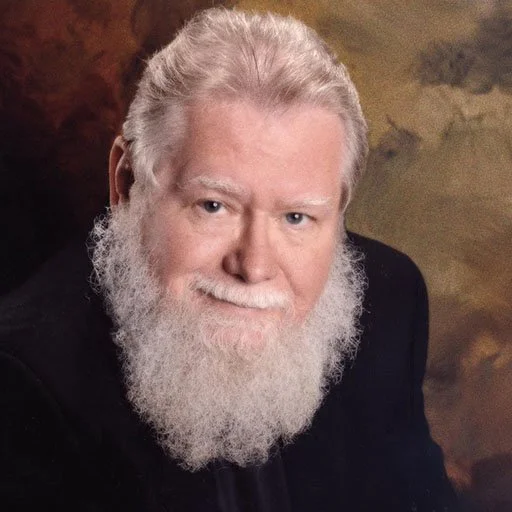
Article written by Monte Judah
* Scripture references from the NASB
The Bible Simplified in 7 Steps
I recently saw this beautiful anecdote on social media:
When God wanted to create fish, he spoke to the sea.
When God wanted to create trees, he spoke to the earth.
But when God wanted to create man, He turned to Himself.
Then God said: “Let us make man in our image and our likeness”.
If we take a fish out of the water, it will die; and when we remove a tree from the soil, it will similarly die. Likewise, when a man is disconnected from GOD, he dies. GOD is our natural environment. We were created to live in His presence. We have to be connected to Him because it is only in Him that life exists. Let’s stay connected to GOD.
Remember: Water without fish is still water, but a fish without water is nothing. The soil without a tree is still soil, but a tree without soil is nothing. GOD without man remains GOD, but a man without GOD is nothing.
I thought the simplicity was brilliant. Unfortunately, the comments on social media were less than enthusiastic. One comment read “The Bible doesn't say God spoke to the water. This is False.” Another said, “This is not the gospel.” Clearly some people fail to see the beauty of a simple message that is grounded in faith and meant to encourage others to have a deeper connection with their Creator.
People often have a tendency to overcomplicate things, focusing on details, rules, or debates that distract from the heart of a concept. In trying to understand or explain something deeply, we can get lost in technicalities, missing the simple truth that was meant to be clear and accessible. Like arguing over the ingredients of a recipe while forgetting the joy of sharing a meal, we chase complexity and overlook the essence. Sometimes, the real power of an idea lies not in how much we analyze it, but in how well we live it. This is exactly how many treat the Bible.
The Bible is long, complex, and sometimes overwhelming. With 66 books, 1189 chapters, written over thousands of years by dozens of authors, it can be hard to know where to start. But behind the stories, genealogies, commandments, poetry, and prophecy, there is a simple, powerful narrative. The Bible tells the story of humanity’s relationship with God - how we were made for His presence, how we lost it, and how we can return.
These 7 steps offer a simplified lens through which to summarize the entire Bible. Let this be your framework as you begin any study to understand the Scripture.
1. The Garden
The Bible begins in Eden. I’ve heard countless debates on the origin of the world. Was the creation made in seven 24-hour days, or over 1,000s of years? Was there really a talking snake and a tree, or is the story merely metaphor and allegory? Forget all that. There is a profound principle in the story of the Garden that is essential to know beyond everything else. It is about relationship. Humanity was created for intimacy with God, to live in His presence. But sin broke that relationship and drove us out. This is the core truth of Eden:
Mankind was made to be in the presence of God. Sin separated us from that presence, and we need to get back.
EVERY story and lesson of Scripture from this point forward is about restoring that connection. How do we get back to the presence of God? How do we escape the places where our mistakes have banished us? How can we be absolved of our sins so we can be worthy to return to that presence? The rest of the Bible answers those questions.
That’s it. That is all one needs to know from the Garden of Eden. You can debate all the other nuances of the story. You can get into deeper studies if you wish. But for your personal growth in your relationship with God, never forget this thesis. The purpose of this story can be summarized in this principle: You belong in the presence of God. How are you going to get back?
2. The Patriarchs
God saved all of humanity in the life of one man —Noah. God later chose one man—Abraham —to restore a relationship with humanity. God promises to him that through his descendants, all the families of the earth would be blessed (Genesis 12:3). The story continues with Abraham’s son, Isaac; then his grandson, Jacob; then his great grandson, Joseph. Why? What is the core principle God is teaching us through these stories?
God can use one life to affect change in generations. One person can save the world.
In the case of Joseph, God used him to literally save the world during a world-wide famine. God is setting this precedent for others to come later.
I also like to include Judah (the son of Jacob and brother of Joseph) in this same discussion. In his story, we see the very first instance of someone willing to lay down his life for another when he pledged to his father to be a surety for the life of his youngest brother, Benjamin (Genesis 43:9). This act prefigures sacrificial love which will be perfected in a future descendant of Judah.
3. Israel
Jacob’s name was changed to Israel. This name no longer represented an individual, but a family. This family would then become a nation and kingdom. In the Egyptian Exodus, the children of Israel were a family of slaves who could become a mighty nation, showing the transformative power of God. The slaves left Egypt as a mixed multitude (Exodus 12:38), meaning all peoples who sought freedom from bondage were joined with Israel. All were adopted into the twelve tribes of Israel. The blessings of God upon the family of Abraham were now available to anyone regardless of heritage. The great lesson given to Israel through their bondage was for them to not mistreat any stranger among them because they knew what it was to be oppressed (Leviticus 19:33–34, Exodus 22:21). Here is the key:
Anyone can be restored from a place of persecution and be welcomed into a new family heritage, and identity. Israel is that heritage.
We gain more than just a belonging — we receive blessings rooted in the promises made to Abraham from God Himself. Israel teaches us that we are not alone. God’s people are a covenant family, and we are invited in. Anyone who continues to carry an “us versus them” mentality and tries to divide the world by heritage has missed the point entirely. The only distinction that should ever be made is whether you are joined to the God of Abraham, Isaac, and Jacob, or not.
4. The Covenant (The Law of Moses)
This nation of slaves was not yet ready to be God's kingdom. They needed law and order. Through Moses, God gave Israel the Torah — His law. This wasn’t just a list of rules; it was a covenant expressing the very heart and character of God. It established the tabernacle, where God’s presence would dwell among His people. It established the altar and sacrificial system, where payment could be made for sin and one could be in right-standing before God. Remember what the Garden of Eden taught us? What was it that we needed?
The Law sets the precedent for God’s presence to dwell among us and a way to be forgiven for sin.
It is actually that simple. Many have fought and argued over the keeping of 613 commandments. We try to obey and fail. But if we stop for one moment to remember what we lost in the Garden, we might see it. The establishment of an Altar and Tabernacle is the direct solution to that problem. Is the Law perfect? No. It does not provide a sacrifice for willful, defiant sin. That sin is deserving of death. We all fall short of keeping our end of the agreement. Yet God’s grace and mercy remains. Even a holy God is willing to stay faithful to love and dwell among sinful people.
The last thing I will add to this section is this. The Law also provides the instructions for redemption — the act by which a family member can legally make restitution for one who is unable to pay his debts (Leviticus 25:47–49). The importance of this particular law will be very apparent shortly.
5. The Judges, Kings, and Prophets
After the first five books of the Bible (the books of Moses), the rest of the Old Testament can be summed up in one section. You can read all about the successes and failures of the people of Israel, the conquests and losses, times of peace and civil war. All the while God is faithful to provide for His people. God first raised up judges to lead the people. He then anointed Kings to reign over them. When correction was needed, God sent prophets to exhort and admonish the kings and the people. So, what is the point of all this history? Let me simplify it for you:
It all points to the Messiah.
From the time of the judges to the reign of kings, and through the voices of the prophets, one message resounds: Someone is coming. Every failure of a judge, every imperfect king, every word of warning or hope from the prophets — it all points forward. The Old Testament is full of stories and lessons, but, at its heart, there is a people still crying for redemption — a longing for the One who would make things right.
6. The Messiah
Yeshua of Nazareth is God in the flesh. He is the answer to every question. He is the solution to every problem.
He is the fulfillment of everything that came before and after Him.
Yeshua is the very presence of God on earth. Where mankind was banished from God’s presence in the Garden, God sends Himself to meet us where we are.
He is singly the savior of the world, exemplifying true sacrificial love, as His earthly father Judah did.
He came first to Israel, to then send the Gospel message into the nations for all to know that salvation is available.
He is the perfect sacrifice for willful, defiant sin so that we may be worthy to stand before our creator. He conquered death so that we may have life.
He is our kinsman-redeemer–related to us through the lineage of Abraham (Matthew 1), and able to redeem us according to the law (Leviticus 25).
He is the ultimate Judge. He is the ultimate King. He is the ultimate Prophet.
In Him, all things are made new. If you believe in Him, then you are welcomed into the family of God and an inheritor of the promises made to Abraham.
For you are all sons of God through faith in Messiah Yeshua. For as many of you as were baptized into Christ have put on Christ. There is neither Jew nor Greek, there is neither slave nor free, there is neither male nor female; for you are all one in Messiah Yeshua. And if you are Christ’s, then you are Abraham’s seed, and heirs according to the promise.
Galatians 3:26–29
This is your story.
The Bible was written for you. It is your story of redemption. You were made for God’s presence. You were lost, but a way has been made for you to return. In Christ, you become part of the family of Abraham. The promises, the inheritance, the calling — it’s yours. Don’t be overwhelmed by the pages and the complexity. Let this simple truth guide your journey: you were made to walk with God, and He made a way for you to come home.
Final Word
This 7-step thesis doesn’t replace in-depth study of the Scriptures — it anchors it. You can devote your entire life to the study of Scripture and never grasp the depth and complexity of God’s word. Many have attempted to do just that while missing the beauty in the simplicity of the narrative. We all have to start somewhere. I pray this simple message will anchor every other study, message, or sermon you partake in as you grow in wisdom and knowledge of your Creator. ■
The law of the LORD is perfect, converting the soul; The testimony of the LORD is sure, making wise the simple;
Psalm 19:7
Shalom,
Article written by Monte Judah
* Scripture references from the NASB